Microwave Limb Sounder
Welcome
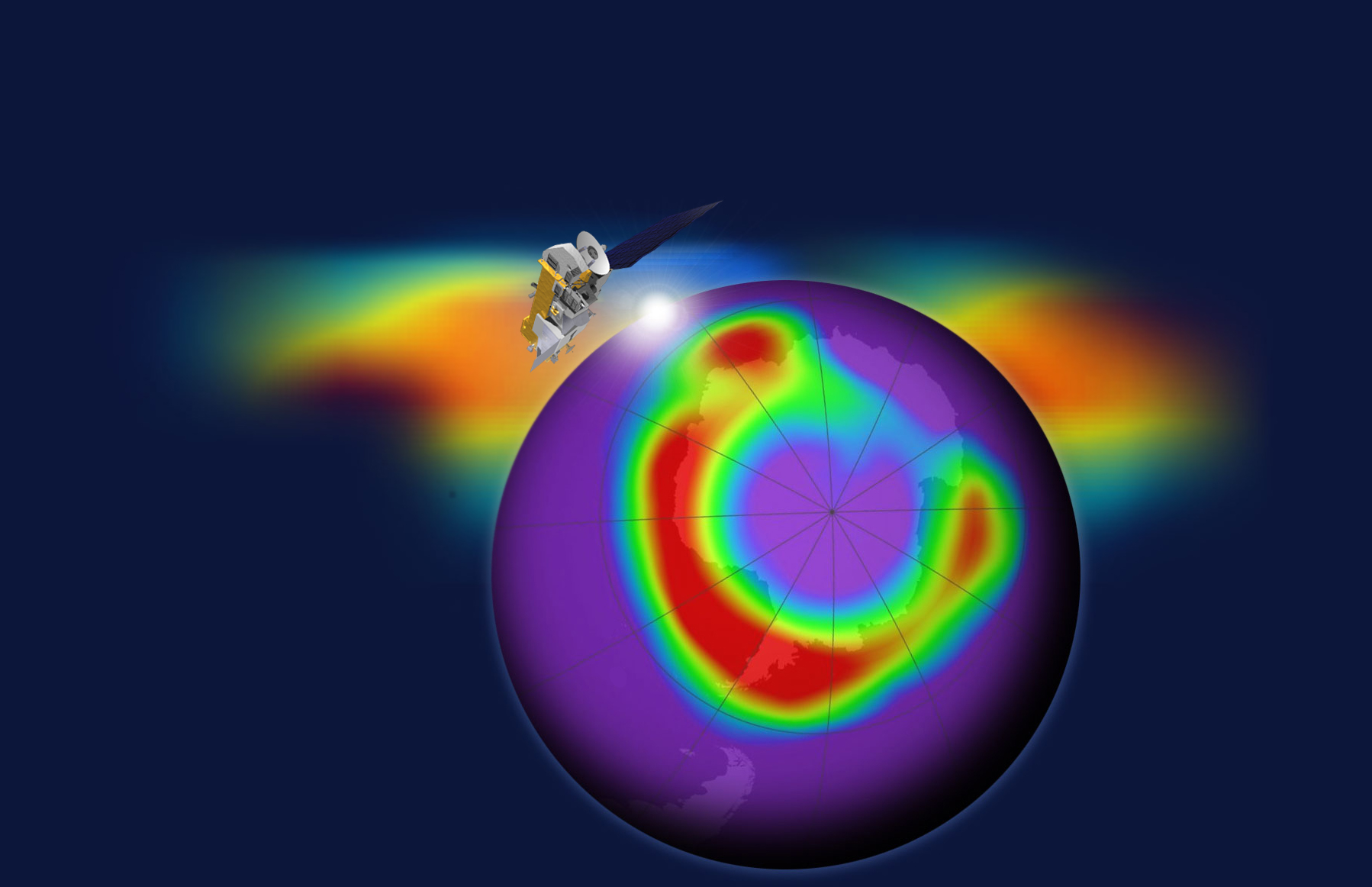
The Microwave Limb Sounder (MLS) experiments measure naturally-occurring microwave thermal emission from the limb (edge) of Earth's atmosphere to remotely sense vertical profiles of atmospheric gases, temperature, pressure, and cloud ice. The overall objective of these experiments is to provide information that will help improve our understanding of Earth's atmosphere and global change.
NEAR REAL-TIME DATA VIEWER
| Current GMT day: |
| Data maps are at 46 hPa |
Latest Publications
- Wu, L., H. Su, J.H. Jiang, and W.G. Read, "Hydration or dehydration: competing effects of upper tropospheric cloud radiation on the TTL water vapor," Atmos. Chem. Phys. Discuss. 12, 4655-4678, doi:10.5194/acpd-12-4655-2012, 2012.
- Huang, J., N.C. Hsu, N.C. Hsu, C. Zhang, M.J. Jeong, R. Gautam, C. Bettenhausen, A.M. Sayer, R.A. Hansell, X. Liu, and J.H. Jiang, "Large-Scale Covariability between Aerosol and Precipitation Over the 7-SEAS Region: Observations and Simulations," Atmospheric Environment, in review. preprint
- Jiang, J.H., H. Su, C. Zhai, V.S. Perun, A. Del Genio, L.S. Nazarenko, L.J. Donner, L. Horowitz, C. Seman, J. Cole, A. Gettelman, M. Ringer, L. Rotstayn, S. Jeffrey, T. Wu, F. Brient, J-L. Dufresne, H. Kawai, T. Koshiro, M. Watanabe, T. L'Ecuyer, W.G. Read, J.W. Waters, B. Tian, J.P. Teixeira, and G.L. Stephens, "Evaluation of Cloud and Water Vapor Simulations in IPCC AR5 Climate Models Using NASA 'A-Train' Satellite Observations," J. Geophys. Res., in review. preprint
- Flury, T., D.L. Wu, and W.G. Read, "Correlation among cirrus ice content, water vapor and temperature in the TTL as observed by CALIPSO and Aura/MLS," Atmos. Chem. Phys. Discuss. 11, 25037-25061, in review. preprint
- Massie, S.T., L. Munchak, J.H. Jiang, and H. Su, "A-Train Satellite Observations of Very Little Cloud Invigoration by Aerosols," J. Geophys. Res., in review. preprint
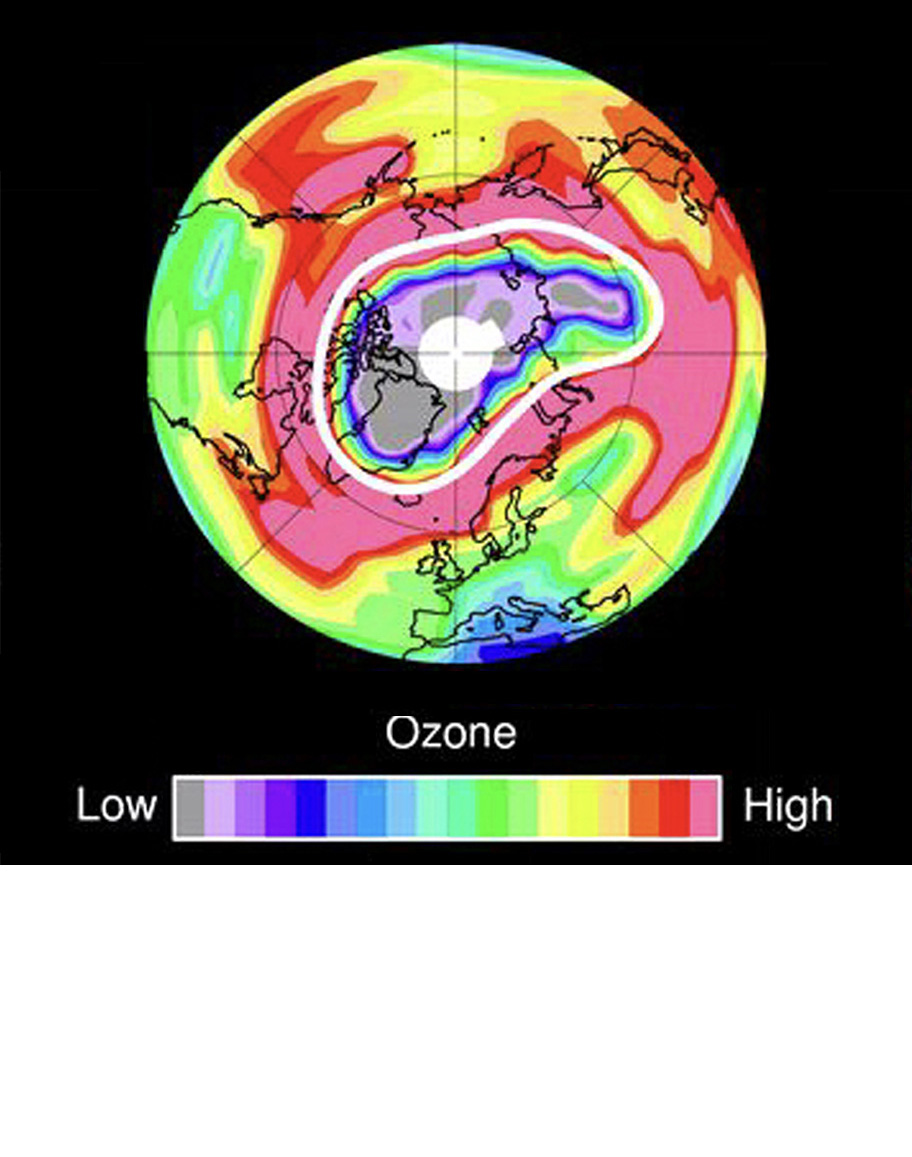
NASA Leads Study of Unprecedented Arctic Ozone Loss

A NASA-led study has documented an unprecedented depletion of Earth's protective ozone layer above the Arctic last winter and spring caused by an unusually prolonged period of extremely low temperatures in the stratosphere.
> Full Story